Category: Animals

This category is dedicated to animal related topics

The Black Rhinoceros: Ecology, conservation, and challenges facing the critically endangered Hook-lipped Rhino

The Black Rhinoceros (Diceros bicornis), also known as the Hook-lipped Rhinoceros, is a critically endangered species of rhinoceros native to eastern and southern Africa. It is one of two extant African rhino species (alongside the White Rhinoceros).

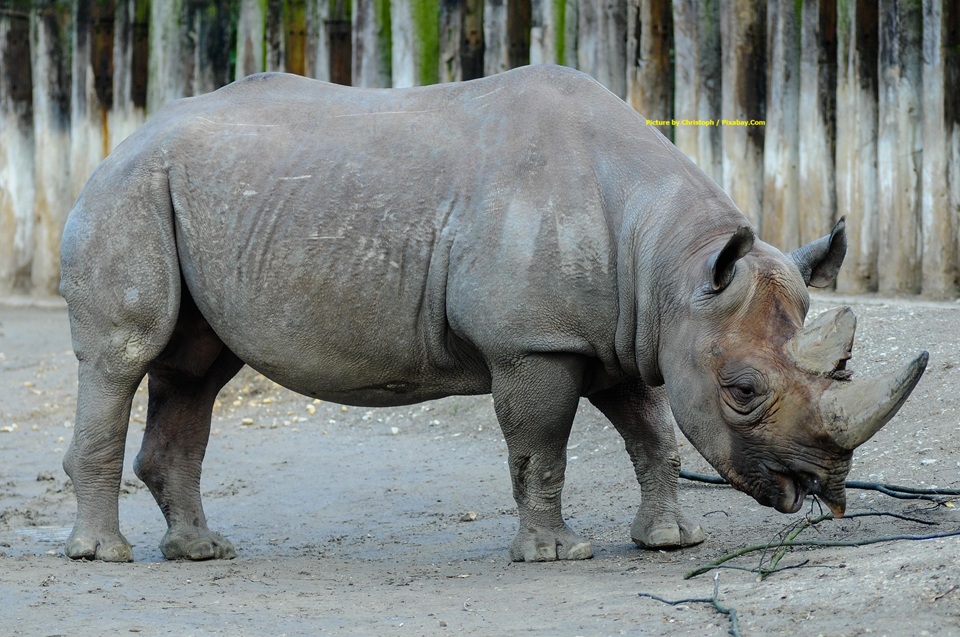
A majestic Black Rhinoceros (Diceros bicornis) stands in profile on a sandy dirt ground within what appears to be an enclosure, its massive gray body showing prominent folds and textured skin as it lowers its head toward some scattered branches on the ground, its two horns clearly visible with the larger front one curving upward while its ears remain alert and Continue

The rhinocerotidae family: an overview of the five living rhinoceros species

The Rhinocerotidae family, commonly known as rhinoceroses or rhinos, comprises a group of large, herbivorous odd-toed Hoofed mammals (perissodactyls) characterized by one or two keratin horns on the snout, thick protective skin, and a massive body size. These animals are among the last surviving megafauna. Today, only five extant species remain: two in Africa and three in South and Southeast Asia.

Physical characteristics

Rhinoceroses are instantly recognizable by their horns, which are made of compressed keratin (the same material as fingernails and hair) rather than bone. These horns are used for defense, territorial displays, and foraging. Most species have a … Continue

The Lesser apes: Gibbons and the remarkable Siamang

The lesser apes, commonly known as gibbons (and including the Siamang), are a fascinating group of small apes belonging to the family Hylobatidae. Often called “lesser” simply due to their smaller size compared to the great apes (chimpanzees, gorillas, orangutans, and humans), they are in no way inferior in ecological importance or behavioral complexity. Gibbons are among the most specialized and acrobatic primates on Earth.

The picture captures a striking Siamang (Symphalangus syndactylus) perched casually on a sturdy wooden beam in what appears to be a zoo enclosure. This large black ape sits in a relaxed yet Continue