
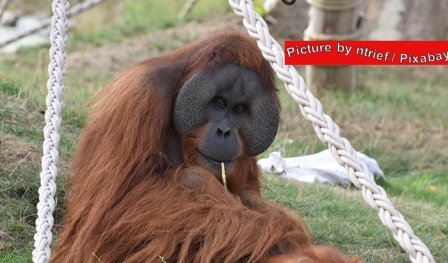
Orangutans, often called the “gardeners of the forest,” are among the most intelligent and charismatic primates on Earth. Native to the lush, biodiverse rainforests of Southeast Asia, these great apes are instantly recognizable by their striking reddish-brown fur, immense physical strength, and soulful, expressive eyes. As one of humanity’s closest relatives, sharing approximately 97% of our DNA, orangutans exhibit remarkable cognitive abilities that rival those of other great apes, such as chimpanzees and gorillas. Tragically, all orangutan species are critically endangered, facing existential threats from habitat destruction, poaching, and the illegal pet trade. Urgent conservation efforts are needed to ensure their survival for future generations.
THE THREE SPECIES OF ORANGUTANS
Orangutans belong to the genus Pongo, and there are three recognized species, each adapted to distinct ecological niches on the islands of Borneo and Sumatra. These species differ in physical appearance, behavior, geographic distribution, size, lifespan, and breeding habits.
- Bornean Orangutan (Pongo pygmaeus)
Found exclusively on the island of Borneo, the Bornean Orangutan is the most widespread of the three species, though still critically endangered. Borneo, the third-largest island in the world, spans parts of Indonesia, Malaysia, and Brunei, and is characterized by vast lowland rainforests, peat swamp forests, and montane forests that provide ideal habitats for these apes. These diverse ecosystems support a rich array of flora and fauna, with dipterocarp trees and fruit-bearing figs being key food sources for orangutans. This species is divided into three subspecies: the Northwest Bornean Orangutan (P. p. pygmaeus), the Northeast Bornean Orangutan (P. p. morio), and the Central Bornean Orangutan (P. p. wurmbii). These subspecies vary slightly in size, coloration, and behavior, with the Central Bornean Orangutan being the most numerous, though still numbering fewer than 100,000 individuals. Bornean Orangutans have broader faces, shorter beards, and darker fur compared to their Sumatran counterparts. Males develop prominent cheek pads (flanges) and throat pouches that amplify their long, resonant calls used to communicate across vast forest distances.
Size and Weight: Adult male Bornean Orangutans typically stand 1.4–1.7 meters (4.5–5.6 feet) tall when upright and weigh 50–100 kg (110–220 pounds), with flanged males often at the higher end. Adult females are smaller, standing 1–1.3 meters (3.3–4.3 feet) and weighing 30–50 kg (66–110 pounds). Their arm span can reach up to 2.3 meters (7.5 feet), aiding their arboreal lifestyle.
Lifespan: In the wild, Bornean Orangutans typically live 35–45 years, though females may occasionally reach their early 50s. In captivity, with proper care, they can live up to 50–60 years.
Breeding Habits: Female Bornean Orangutans reach sexual maturity around 10–15 years and have a gestation period of approximately 8.5–9 months (about 245–270 days). They typically give birth to a single offspring, with twins being extremely rare. Newborns weigh approximately 1.5–2 kg (3.3–4.4 pounds) at birth. Females usually reproduce every 6–8 years due to the long dependency period of their young, resulting in one of the lowest reproductive rates among mammals. - Sumatran Orangutan (Pongo abelii)
Native to the northern regions of Sumatra, particularly in the Leuser Ecosystem, the Sumatran Orangutan is slimmer and more arboreal than its Bornean relatives. Sumatra, Indonesia’s second-largest island, features dense tropical rainforests, mountainous terrain, and swampy wetlands, with the Leuser Ecosystem being one of the most biodiverse regions on Earth, home to the Sumatran Tiger(Panthera tigris sondaica), Sumatran Rhinoceros(Dicerorhinus sumatrensis), and Asian Elephant(Elephas maximus, specifically the Sumatran Elephant) alongside the Sumatran Orangutan. The island’s highland and lowland forests provide abundant fruit trees, critical for the Sumatran Orangutan’s diet. With an estimated population of just 14,000, this species is critically endangered. Sumatran Orangutans have lighter, cinnamon-colored fur and longer facial hair, giving them a distinctive appearance. They are highly adapted to life in the canopy, rarely descending to the forest floor, and are known for their exceptional tool-using abilities, such as crafting sticks to extract insects or seeds from fruit. Their social structure is more flexible than that of Bornean Orangutans, with occasional group interactions during periods of abundant fruit.
Size and Weight: Adult male Sumatran Orangutans stand 1.4–1.8 meters (4.6–5.9 feet) tall and weigh 50–90 kg (110–200 pounds), with flanged males being larger. Adult females stand 0.9–1.2 meters (3–4 feet) and weigh 30–45 kg (66–99 pounds). Their arm span extends up to 2.4 meters (8 feet), facilitating their tree-dwelling habits.
Lifespan: Sumatran Orangutans in the wild typically live 30–40 years, with some individuals reaching their mid-40s. In captivity, they can live up to 50–55 years under optimal conditions.
Breeding Habits: Female Sumatran Orangutans reach sexual maturity at around 10–12 years and have a gestation period of about 8.5–9 months (approximately 245–270 days). They typically produce a single offspring, with twins being exceptionally rare. Newborns weigh about 1.5–2 kg (3.3–4.4 pounds). - Tapanuli Orangutan (Pongo tapanuliensis)
The rarest and most recently discovered orangutan species, the Tapanuli Orangutan was identified as a distinct species in 2017 based on genetic, morphological, and behavioral differences. Found only in the Batang Toru ecosystem of South Tapanuli, Sumatra, this species is the most critically endangered great ape, with fewer than 800 individuals remaining. The Batang Toru region, a rugged, mountainous area in southern Sumatra, consists of primary and secondary forests interspersed with steep valleys, offering a unique but limited habitat for these orangutans. Tapanuli Orangutans have smaller, more oval-shaped skulls, frizzier fur, and a unique vocalization pattern compared to other orangutans. Their limited range and small population make them particularly vulnerable to extinction, with ongoing threats from proposed hydropower projects in their habitat.
Size and Weight: Adult male Tapanuli Orangutans are slightly smaller than other species, standing 1.3–1.6 meters (4.3–5.3 feet) tall and weighing 40–80 kg (88–176 pounds). Adult females stand 0.9–1.2 meters (3–4 feet) and weigh 25–40 kg (55–88 pounds). Their arm span reaches up to 2.1 meters (7 feet), slightly shorter than that of Sumatran Orangutans.
Lifespan: Due to their recent discovery and limited population, data on Tapanuli Orangutan lifespans are less comprehensive. In the wild, they are estimated to live 30–40 years, similar to Sumatran Orangutans, with potential to reach their mid-40s. In captivity, lifespans of up to 50 years are possible, though few Tapanuli Orangutans are in captivity.
Breeding Habits: Limited data exist due to the small population, but female Tapanuli Orangutans likely reach sexual maturity around 10–12 years, with a gestation period of about 8.5–9 months (approximately 245–270 days), similar to other orangutan species. They typically give birth to a single offspring, with twins being extremely rare. Newborns are estimated to weigh around 1.5–2 kg (3.3–4.4 pounds), consistent with other orangutan species.
BEHAVIOR AND INTELLIGENCE
Orangutans are renowned for their extraordinary intelligence, which rivals that of other great apes. They exhibit advanced problem-solving skills, such as using sticks to extract termites from mounds, fashioning leaf gloves to handle spiny fruits, or constructing umbrellas from branches to shield themselves from rain. In captivity, orangutans have demonstrated the ability to learn sign language, recognize themselves in mirrors (indicating self-awareness), and even engage in bartering behaviors, showcasing their cognitive sophistication.
Unlike many other primates, orangutans are primarily solitary, with males maintaining large home ranges that overlap with those of multiple females. Adult males, particularly dominant “flanged” males with large cheek pads, use long calls to advertise their presence and deter rivals, a sound that can travel up to a kilometer through dense forests. Females form strong bonds with their offspring, raising them for up to eight years—the longest dependency period of any primate aside from humans. This extended maternal care allows young orangutans to learn critical survival skills, such as foraging and nest-building.
Orangutans are primarily frugivorous, with fruit making up about 60-90% of their diet, depending on availability. They are key seed dispersers, earning their “gardeners of the forest” moniker by spreading seeds across their habitats, thus maintaining forest biodiversity. In lean seasons, they supplement their diet with leaves, bark, flowers, insects, and occasionally small vertebrates like slow lorises or birds’ eggs. Their foraging patterns are highly adaptive, with individuals memorizing the locations of fruiting trees and timing their visits based on seasonal cycles—a feat requiring exceptional spatial memory.
Orangutans also display cultural behaviors, with different populations exhibiting unique traditions. For example, some Sumatran Orangutans use leaves as napkins to wipe their faces, while others in Borneo create “kiss-squeak” vocalizations by modifying leaves with their hands. These learned behaviors, passed down through observation and imitation, highlight the depth of orangutan intelligence and social learning.
CONSERVATION CHALLENGES
Orangutans face a dire combination of threats that have pushed all three species to the brink of extinction. The most pressing challenges include:
- Deforestation
The rapid expansion of palm oil plantations, logging, and agricultural development has devastated orangutan habitats. Between 1999 and 2015, Borneo and Sumatra lost over 100,000 square kilometers of forest, equivalent to an area larger than South Korea. Palm oil, a cheap and versatile oil used in countless consumer products, is a primary driver of this deforestation. As forests are cleared, orangutans lose their food sources, nesting sites, and travel routes, often leading to starvation or human-wildlife conflict. - Poaching and the Illegal Pet Trade
Poaching remains a significant threat, with orangutans killed for bushmeat or captured for the illegal pet trade. Infant orangutans, prized for their cuteness, are often taken after their mothers are killed, a process that is both brutal and unsustainable. These captives frequently suffer from malnutrition and psychological trauma, with only a fraction surviving long enough to be rescued and rehabilitated. - Infrastructure Development
Large-scale infrastructure projects, such as roads, dams, and mining operations, fragment orangutan habitats and isolate populations, reducing genetic diversity and increasing vulnerability to extinction. The proposed Batang Toru hydropower dam in Sumatra, for instance, threatens the Tapanuli Orangutan’s already limited range.
CONSERVATION EFFORTS
Efforts to save orangutans are underway, but the challenges are immense. Conservation organizations, such as the Orangutan Foundation, Borneo Orangutan Survival Foundation (BOSF), and the Sumatran Orangutan Conservation Programme (SOCP), are working tirelessly to protect and restore habitats, rescue and rehabilitate orphaned orangutans, and promote sustainable land-use practices. Key strategies include:
- Habitat Protection: Establishing protected areas and wildlife corridors to connect fragmented forests, ensuring orangutans can move freely and maintain genetic diversity.
- Rehabilitation and Release: Rescuing orphaned or injured orangutans, rehabilitating them in specialized centers, and reintroducing them to the wild. Programs like those run by BOSF teach young orangutans essential survival skills before release.
- Community Engagement: Working with local communities to promote sustainable livelihoods, such as eco-tourism or agroforestry, reducing reliance on deforestation-driven industries like palm oil.
- Policy Advocacy: Pressuring governments to enforce stricter regulations on logging, palm oil production, and wildlife trafficking.
CULTURAL AND ECOLOGICAL SIGNIFICANCE
Orangutans hold a special place in the cultural fabric of Southeast Asia. Their name, derived from the Malay words “orang” (person) and “hutan” (forest), reflects their perceived similarity to humans in local folklore. Indigenous communities in Borneo and Sumatra often view orangutans as guardians of the forest, embodying the spirit of the wilderness. Ecologically, orangutans are keystone species, playing a critical role in maintaining forest ecosystems through seed dispersal and shaping forest structure by breaking branches and creating canopy gaps.
HOW TO HELP
Individuals can play a vital role in orangutan conservation by taking the following actions:
- Support Sustainable Products: Choose products certified by the Roundtable on Sustainable Palm Oil (RSPO) to reduce demand for deforestation-driven palm oil. Check labels on food, cosmetics, and household goods.
- Donate to Conservation Organizations: Contribute to reputable groups like the Orangutan Foundation, BOSF, or SOCP, which fund habitat protection, rehabilitation, and research.
- Raise Awareness: Share information about orangutan conservation on social media or through community events to educate others about their plight.
- Advocate for Policy Change: Support campaigns urging governments and corporations to adopt sustainable practices and protect orangutan habitats.
- Visit Responsibly: If traveling to Borneo or Sumatra, choose ethical eco-tourism operators that prioritize orangutan welfare and habitat preservation.
THE FUTURE OF ORANGUTANS
Without urgent and sustained action, orangutans could vanish from the wild within decades, leaving behind only fragmented populations in captivity. Their loss would not only be a tragedy for biodiversity but also a stark reminder of humanity’s failure to coexist with our closest relatives. By supporting conservation efforts, making informed consumer choices, and advocating for stronger environmental protections, we can help ensure that the haunting calls of orangutans continue to echo through the rainforests of Southeast Asia for generations to come.


